Mykonos Photoshoot Guide 2026: Little Venice, Windmills & White Lanes
Mykonos is one of the most photographed islands in Greece — and one of the easiest to photograph badly. By late morning the lanes of Chora are shoulder to shoulder, the light is hard and flat, and the meltemi is throwing hair and dresses in every direction. Shot at the right hour, though, Mykonos gives you white walls, red church domes, bougainvillaea and the Aegean in a way no other Cycladic island quite matches. This guide covers the spots that actually work — Little Venice, the Kato Mili windmills, the lanes of Chora, the beaches — and the two things that decide whether your photos succeed: the wind and the clock.
5 photo spots in Mykonos — click a pin to open the full guide
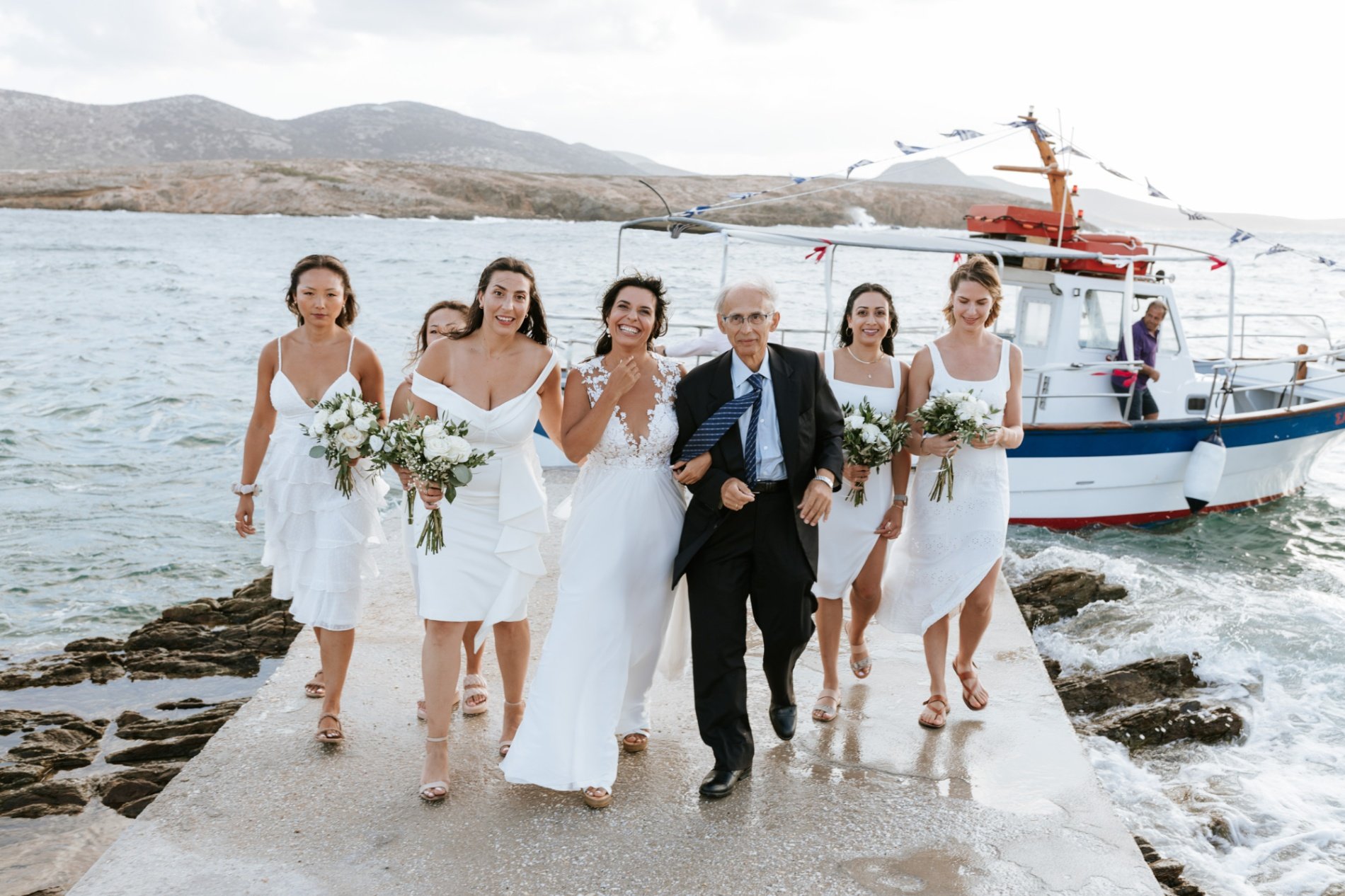
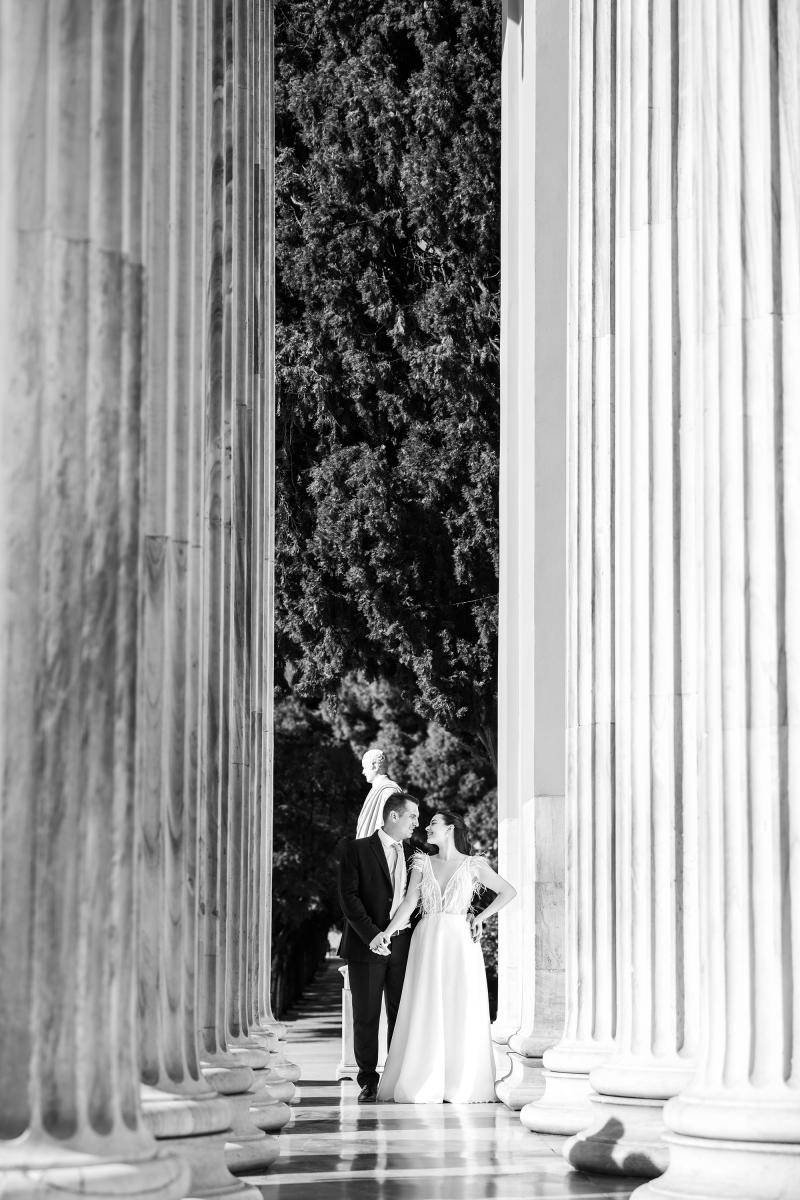
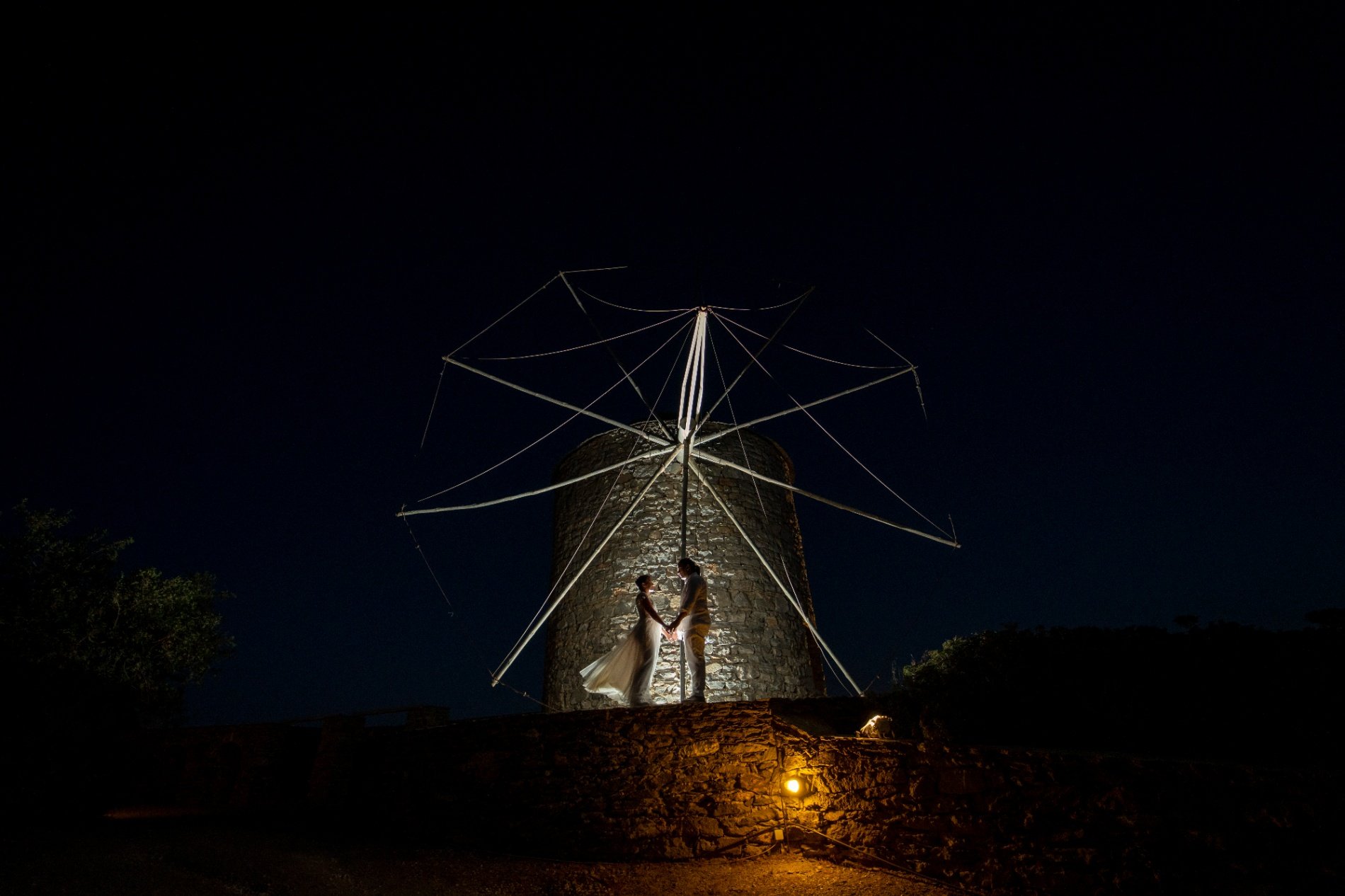
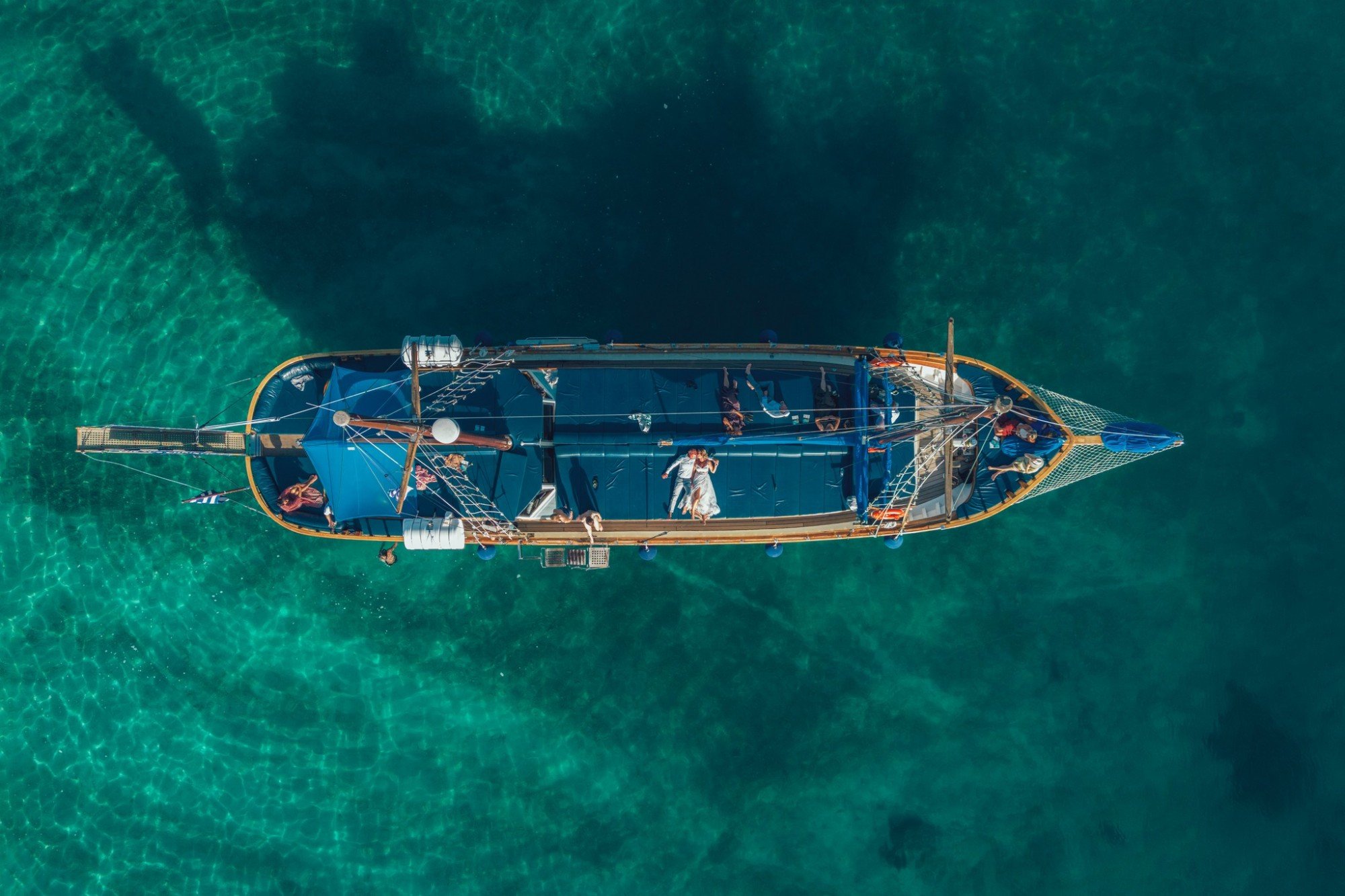
Real shots from Mykonos
Little Venice (Alefkandra)
The row of old captains' houses with wooden balconies hanging directly over the water is the single most recognisable frame in Mykonos. Two realities to plan around. First, Little Venice faces west, so its famous light is the golden hour before sunset — which is exactly when every bar terrace is full and the seafront walkway becomes a slow-moving queue. Second, waves break against the buildings whenever the meltemi blows hard; the spray looks beautiful in photos and is unkind to lenses and silk.
The workaround is to shoot Little Venice twice if you can. Early morning gives you the balconies, the empty walkway and soft, even light with nobody in the background. If you want the sunset glow, arrive well before the sun drops, take your frames from the rocks below the windmills looking back at the houses, and accept that there will be people — a couple in the foreground with a lively Little Venice behind them is honest, and it works.
The windmills of Kato Mili
The row of whitewashed windmills on the low ridge above Little Venice faces west over the sea. That means two very different pictures: at sunset the mills become backlit silhouettes, and at sunrise they catch the first warm light with almost nobody around. The ridge is one of the windiest points in town, so plan hair and clothing accordingly — a fitted dress behaves far better here than a loose one. The gaps between the mills give clean sky backgrounds, and a few steps downhill towards Alefkandra let your photographer frame the mills above you with the town beyond.
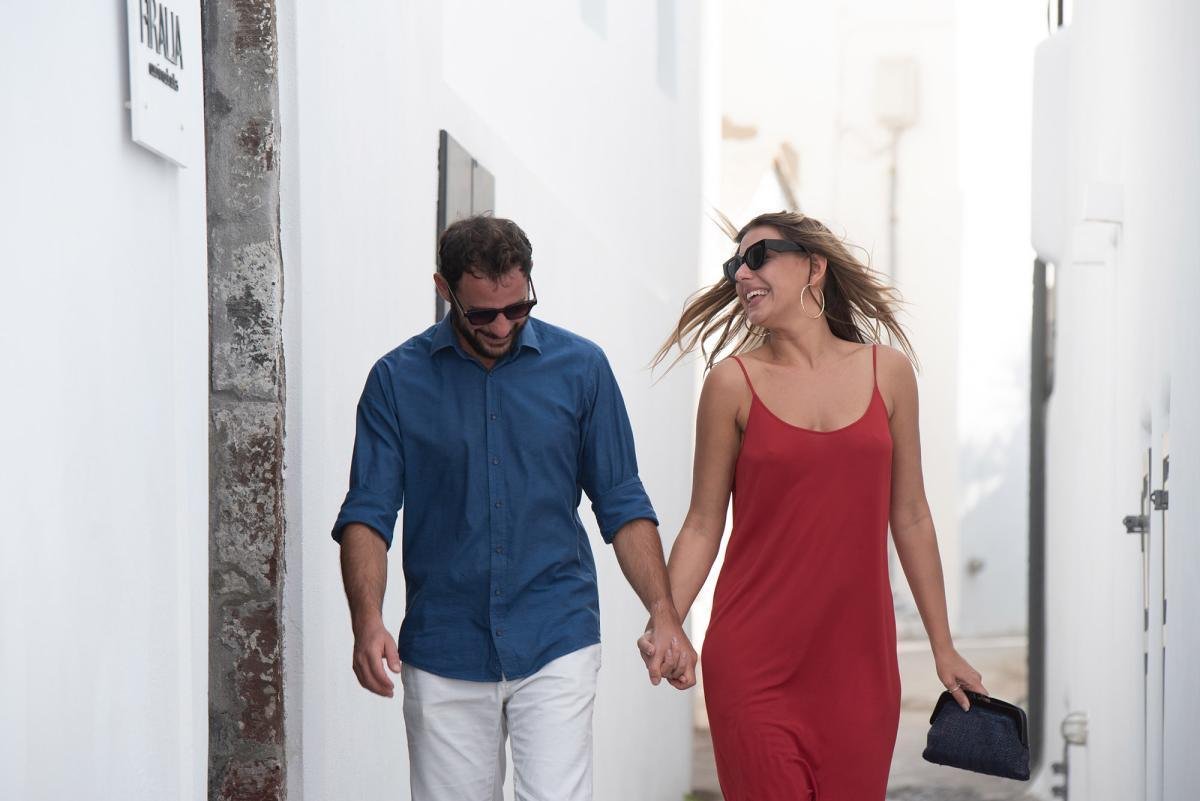
Chora's white lanes
The maze of Mykonos Town was built to confuse pirates and slow the wind, and it does both jobs on your shoot as well: the lanes stay sheltered even on a rough meltemi day, which makes Chora the fallback location whenever the wind wins. Matogianni Street is the famous one — boutiques, bougainvillaea, painted doors — but the best frames are usually one or two turns off it, where a red chapel door or a whitewashed staircase appears with no crowd at all.
Panagia Paraportiani
The melted-looking whitewashed church near the old port is the most sculptural building on the island. Morning sidelight shows its curves best, and it is a two-minute walk from Little Venice, so it slots naturally into any Chora route.
Beach options: south or north
Mykonos beaches split cleanly by wind. The south coast — Ornos, Psarou, Platis Gialos, Elia — stays sheltered when the meltemi blows from the north, which is the case on most July and August afternoons. Agios Ioannis, on the southwest tip, adds a bonus: the view across the water to Delos, and a proper sunset. Fokos and Agios Sostis in the north are wild, undeveloped and nearly empty — spectacular on a calm day, a sandblasting on a windy one. Check the forecast on the morning of the shoot, not the day before; the meltemi is decided on the day.
What clients say about this kind of shoot
I don't know where to begin! Working with Kostas was truly wonderful — not just because his photos and videos are incredible, but because he's a person full of passion, humour and fantastic energy. I've always felt a bit awkward with posed photos, but from the first minute he made me relax, laugh and genuinely enjoy it. He captured natural moments, real smiles and all the emotion of that day in a way I'll never forget. The result exceeded every expectation! The photos are vivid, full of light and feeling, and the video is truly cinematic — the editing, the music, the details, all put together with so much love and taste that every time we watch it we relive our day from the beginning. Beyond being an excellent professional, he's someone who loves what he does, and it shows in every frame. If you want to keep your most beautiful moments alive, there's no better choice. 📸💫
— Konstantina K. on Konstantinos P.
It has been a year since our daughter got married. We cannot let this anniversary pass without reviewing our wonderful photographer, Christos Aggelidis. He also photographed our first daughter's wedding. We were so happy with his work then that we hired him again, and we are just as thrilled with the results this time. Christos and his team are true professionals. He listened closely to learn what we wanted. Then, he and his team used their great skills to capture photos and videos that truly reflect our family. We are so proud of these memories. He is a joy to work with and a master of his craft. We thank him deeply and recommend him to anyone. You will not be disappointed; you will be delighted.
— Nikos T. on Christos A.
An excellent professional. Impeccable guidance, with no pressure. He makes you feel at ease, you can talk through exactly what you want, and he delivers the result you're after!
— Anna G. on Konstantinos P.
There are some people who aren't simply professionals but become part of the most important moments of your life. Christos is one of those people for us. After our wedding years ago, there was no second thought about who would be beside us at our child's christening. And once again, everything was exactly as we felt it: true, beautiful and full of emotion. He has a unique way of making you feel at ease and at the same time capturing moments as they really are — without exaggeration, but with a great deal of love. For us he isn't just an excellent photographer. He is someone we trust, whom we hold in high regard and whom we are glad to have at our most important moments. Christos, thank you from the bottom of our hearts for the memories we will keep for a lifetime. 😊😊
— Barbara P. on Christos A.
This was actually our second time working with Christos! After seeing his work at my sister's wedding, we knew we wanted him for ours as well. Once again, it was absolutely the right decision! Christos is extremely easy to communicate with, speaks English excellently, and throughout the day was professional, attentive, creative and incredibly hardworking. We had specific requests, and he delivered exactly what we were hoping for, often capturing moments we didn't even realise would be so meaningful. The final photos, the album and the wedding video were beautiful. Choosing Christos a second time for a second big family moment was an easy decision. We would highly recommend him to anyone looking for a photographer who is truly passionate about his work and delivers with such care and attention. THANK YOU CHRISTOS!
— Eve D. on Christos A.
We are so happy we chose Leo for our wedding photos! He went above and beyond, taking us to beautiful spots the day before and after the wedding, and he captured every single moment of the wedding day beautifully. Our photos are unbelievably gorgeous. He is such a lovely person with amazing talent — we recommend him 100% to all future couples out there. We are so glad we chose him. Thank you so much, Leo, for capturing our special day and all the memories!
— Sarah & Denver on Leo K.
The meltemi: what the wind really does
From roughly mid-June to early September a dry northern wind, the meltemi, blows across the Cyclades — strongest in the afternoon, calmer at dawn and after sunset. Mykonos is nicknamed the island of the winds, and there is no point fighting that; you work with it. The practical rules: mornings are calmer than afternoons; Chora's lanes and the south-coast beaches are your shelter; a flowing dress looks spectacular in a moderate breeze and impossible in a strong one, so bring one flowy and one fitted option; and secure hats, veils and anything lighter than a camera.
The early-morning strategy
Everything above points the same way: shoot early. Between cruise arrivals and late-night crowds, Chora is genuinely empty only from roughly 6:30 to 9:00 in summer. In that window you get Little Venice with nobody on the walkway, the windmills in first light, cooler air, calmer wind and shopkeepers washing the marble — Mykonos at its most photogenic and most local. Sunset is for the windmill silhouettes and the golden glow on Alefkandra, crowds included. The ideal Mykonos session is a split one; if you have to choose a single slot, choose dawn.
Making it happen
A local photographer solves the two problems a visitor cannot: reading the day's wind and knowing which lane is empty at which hour. Photo Greece works with photographers based on Mykonos for couples, proposals, honeymoons and families, with all-inclusive sessions from €379. Browse the photographers, pick your slot — and set the alarm. Mykonos before 8am is a different island, and it is all yours.
Frequently asked questions
What is the best time of day for a photoshoot in Mykonos?
Early morning: Chora is genuinely empty only from roughly 6:30 to 9:00 in summer, when you get Little Venice with nobody on the walkway, the windmills in first light, cooler air and calmer wind. Sunset is for windmill silhouettes and the golden glow on Alefkandra, crowds included — if you can only pick one slot, choose dawn.
How does the meltemi wind affect a Mykonos photoshoot?
From roughly mid-June to early September the meltemi blows across the Cyclades, strongest in the afternoon and calmer at dawn and after sunset. Mornings are your friend, Chora's sheltered lanes are the fallback whenever the wind wins, and a fitted dress behaves far better than a loose one on the windmill ridge. Check the forecast on the morning of the shoot, not the day before.
Which Mykonos beaches work best for a photoshoot?
The south coast — Ornos, Psarou, Platis Gialos and Elia — stays sheltered when the meltemi blows from the north, as it does on most July and August afternoons. Agios Ioannis on the southwest tip adds the view across to Delos and a proper sunset. Fokos and Agios Sostis in the north are wild and nearly empty, spectacular on a calm day and a sandblasting on a windy one.
Want professional photos on Mykonos?
Browse portfolios, compare packages, and book a verified local photographer in minutes.