Milos Photoshoot Guide 2026: Sarakiniko, Klima and Plaka
Milos is the island people book once they have seen everyone else's Santorini photographs. It gives you a white volcanic moonscape five minutes from the port, a row of boathouses painted red, yellow and turquoise, and a hilltop capital that watches the sun go down without anybody queuing for the view. Sessions on Milos start from €379, the island's light works twice a day rather than once, and the only real planning problem is the wind. Here is the working guide — spot by spot, hour by hour.
4 photo spots in Milos — click a pin to open the full guide
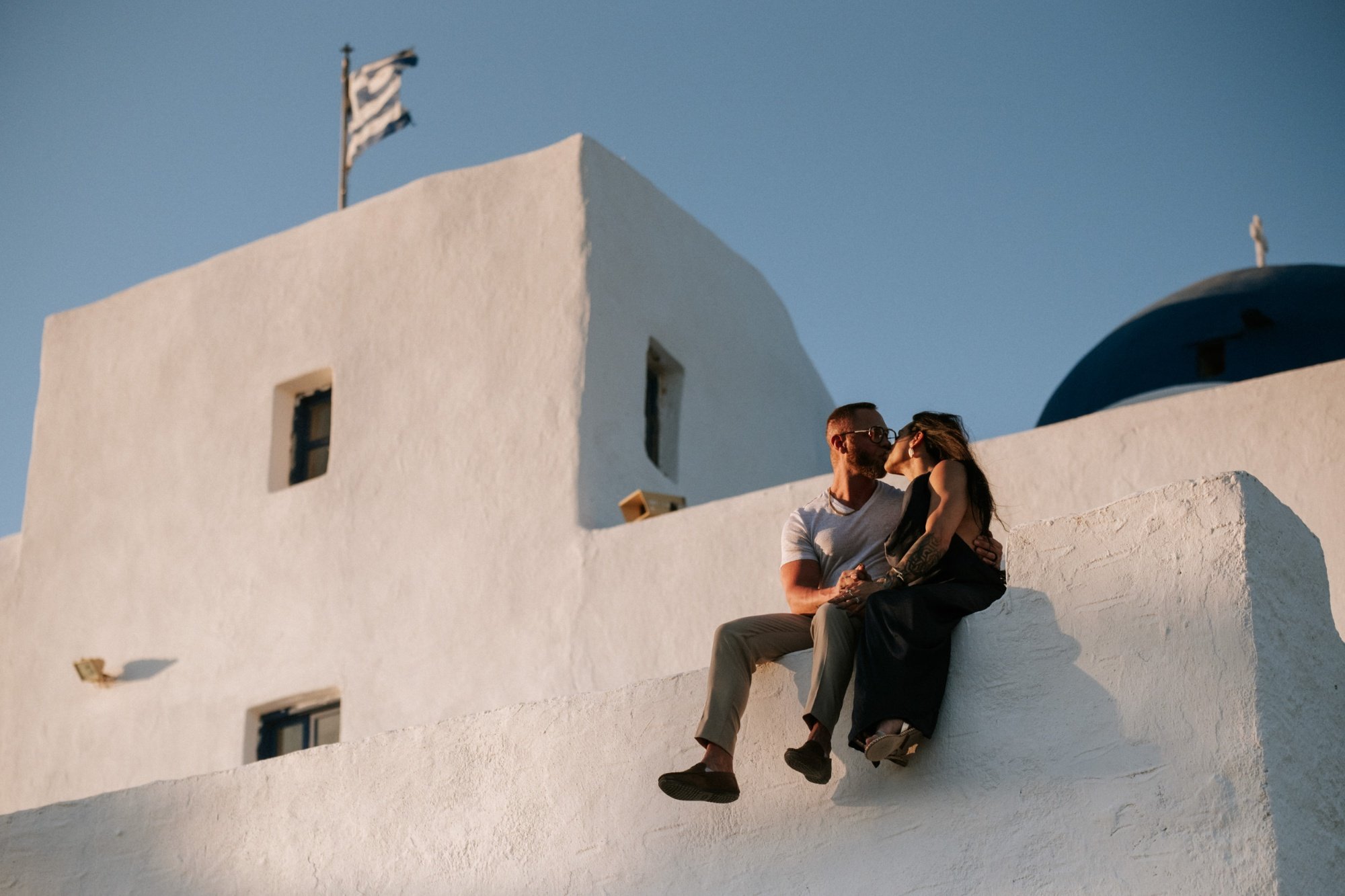
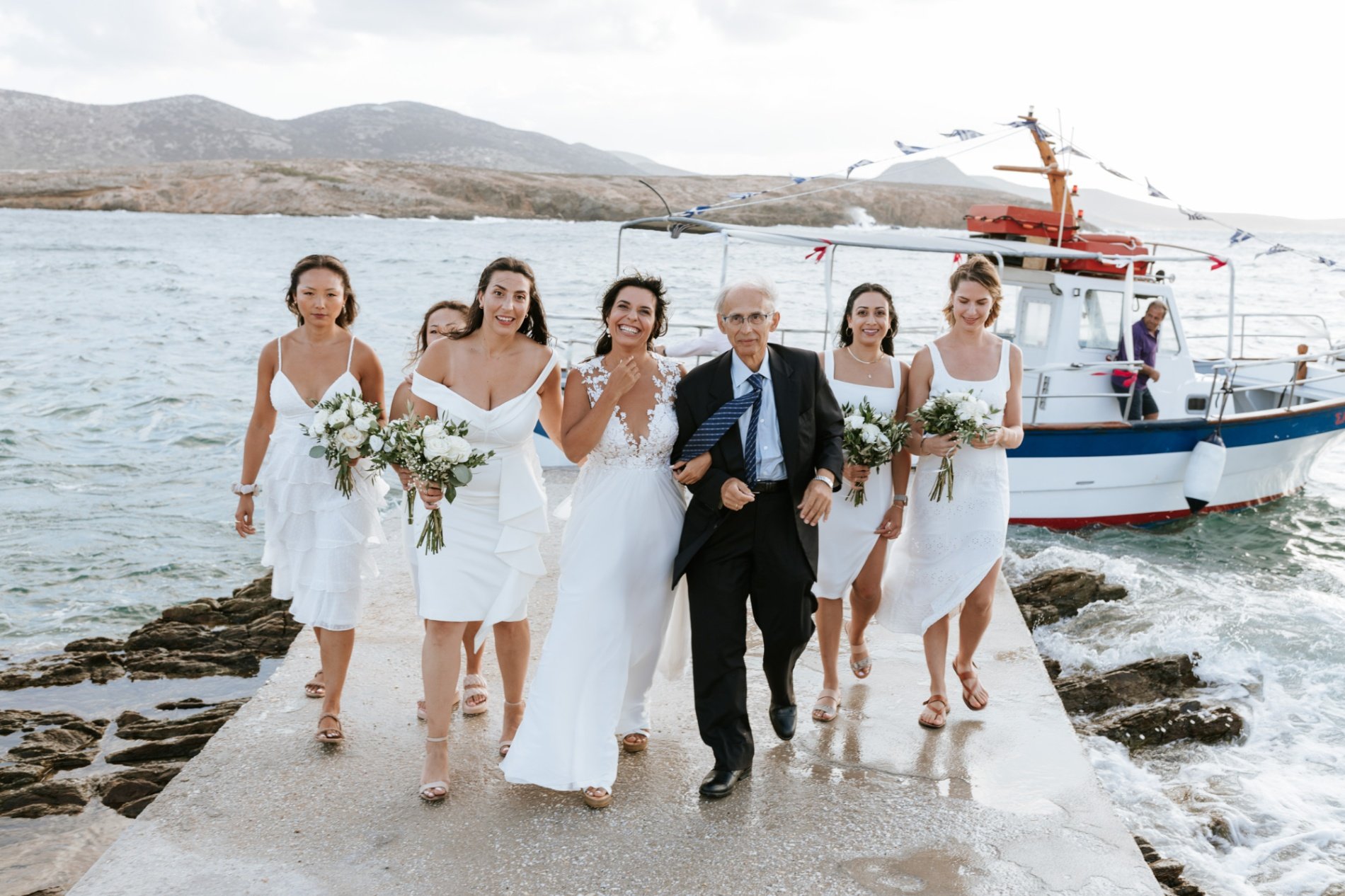
Real shots from Milos
Sarakiniko: white rock, two windows of light
Sarakiniko is why most people come. It is a headland of wind-carved white volcanic rock about five minutes from the port at Adamas — bone white against ink-blue water, with smooth channels and hollows that look like a film set for a planet nobody has named. It photographs unlike anywhere else in Greece, and it has exactly two usable windows:
- First light. The rock is empty, the surface is cool, and the low sun models every curve instead of flattening it. This is the hour for couples and for proposals — nobody is watching, and the walk in from the road takes three minutes.
- The last hour. By late afternoon the shadows come back, the glare drops off the white surface, and the sea goes from turquoise to deep blue. Swimmers thin out. Bring one strong colour: on Sarakiniko, white on white disappears.
Midday here is the one hour to avoid. The rock acts as a giant reflector, the light comes straight down, and there is no shade anywhere on the headland. Shoes matter more than you would expect — the rock is smooth, sloped and slippery underfoot in places.
Klima and the painted boathouses
Below Plaka, on the western shore, Klima is a single row of syrmata: boat garages cut into the rock with doors painted red, yellow and turquoise, whitewashed houses stacked on top of them, and no road behind. Because the row faces west, the colours only sing after five in the afternoon — come at noon and you will find flat, grey doors and wonder what the fuss was about.
Two more fishing hamlets do the same trick on a smaller scale. Mandrakia and Firopotamos, both a short drive north, have their own syrmata, a chapel on the rocks and far fewer visitors than Klima. A photographer who lives here will usually pick between the three on the day, based on where the swell and the light are landing — which is exactly the kind of decision you cannot make from a hotel booking screen.
Plaka, Trypiti and the sunset the island shares
Plaka is the island capital: a hilltop of stepped lanes, white walls and bougainvillea that ends at the castle rock and the little church of Panagia Thalassitra. Cars stop at the edge of the village, so the lanes photograph clean, and they hold shade well into the afternoon — which makes Plaka the sensible answer to a midday session when Sarakiniko is unusable.
The climb to the castle takes about fifteen minutes from the village square, and everyone on Milos does it at sunset. It is a shared, cheerful crowd rather than a scrum, and the view runs all the way across the bay. Just below, Trypiti holds the island's ancient theatre and the early-Christian catacombs. Both are ticketed archaeological sites with posted hours, and rules on tripods and commercial work vary — check before you plan a session around either, and treat the theatre as a bonus rather than the centrepiece.
What clients say about this kind of shoot
We had a wonderful family photoshoot and really enjoyed the entire experience. They made a genuine effort to help us feel comfortable and relaxed. Communication was excellent, and the photos turned out absolutely beautiful. We also received them very quickly. We would definitely recommend this photography studio. We are incredibly grateful and very happy with the results!
— Lusin A. on Teo F.
Was recommended Teo by the lady who owns the venue where I got married! I can honestly say he was the most professional photographer I've ever met! Nothing was too much trouble for him from the communication to us receiving our pictures and video exactly 1 week after our wedding! I would highly recommend him for any sort of photography. He made mine and my husbands day so relaxing and we have received some exceptional photographs 🩵 once again, thank you from the bottom of our hearts!
— Kelly C. on Teo F.
It has been a year since our daughter got married. We cannot let this anniversary pass without reviewing our wonderful photographer, Christos Aggelidis. He also photographed our first daughter's wedding. We were so happy with his work then that we hired him again, and we are just as thrilled with the results this time. Christos and his team are true professionals. He listened closely to learn what we wanted. Then, he and his team used their great skills to capture photos and videos that truly reflect our family. We are so proud of these memories. He is a joy to work with and a master of his craft. We thank him deeply and recommend him to anyone. You will not be disappointed; you will be delighted.
— Nikos T. on Christos A.
There are some people who aren't simply professionals but become part of the most important moments of your life. Christos is one of those people for us. After our wedding years ago, there was no second thought about who would be beside us at our child's christening. And once again, everything was exactly as we felt it: true, beautiful and full of emotion. He has a unique way of making you feel at ease and at the same time capturing moments as they really are — without exaggeration, but with a great deal of love. For us he isn't just an excellent photographer. He is someone we trust, whom we hold in high regard and whom we are glad to have at our most important moments. Christos, thank you from the bottom of our hearts for the memories we will keep for a lifetime. 😊😊
— Barbara P. on Christos A.
This was actually our second time working with Christos! After seeing his work at my sister's wedding, we knew we wanted him for ours as well. Once again, it was absolutely the right decision! Christos is extremely easy to communicate with, speaks English excellently, and throughout the day was professional, attentive, creative and incredibly hardworking. We had specific requests, and he delivered exactly what we were hoping for, often capturing moments we didn't even realise would be so meaningful. The final photos, the album and the wedding video were beautiful. Choosing Christos a second time for a second big family moment was an easy decision. We would highly recommend him to anyone looking for a photographer who is truly passionate about his work and delivers with such care and attention. THANK YOU CHRISTOS!
— Eve D. on Christos A.
We are so happy we chose Leo for our wedding photos! He went above and beyond, taking us to beautiful spots the day before and after the wedding, and he captured every single moment of the wedding day beautifully. Our photos are unbelievably gorgeous. He is such a lovely person with amazing talent — we recommend him 100% to all future couples out there. We are so glad we chose him. Thank you so much, Leo, for capturing our special day and all the memories!
— Sarah & Denver on Leo K.
Kleftiko, and the day the wind decides
Kleftiko — the pirates' cove of white stacks and sea caves on the south-west coast — is the island's postcard, and it is boat-only. Trips run out of Adamas and take three to four hours. It is spectacular, it is a genuine day out, and it is the first thing the summer meltemi cancels.
That matters for planning. The meltemi is the dry northern wind that sweeps the Cyclades hardest in July and August, usually building through the afternoon. On a windy week, Kleftiko boats do not sail and the north coast turns to swell — so treat a boat session as a bonus, not the reason you booked. The island's fixed points are all on land: Sarakiniko at dawn, Klima after five, Plaka whenever you like. If the wind is up, a photographer will simply move you to the sheltered side; the same wind that closes the north can leave the south glassy.
Getting there, and fitting a session into the trip
Milos sits on the western Cyclades ferry line: high-speed boats from Piraeus take around three hours, conventional ferries considerably longer, and there is a small airport with domestic flights from Athens. Ferries also connect the island to Santorini, Paros and Naxos, so it slots naturally into an island-hopping route — the quieter Cyclades guide covers the other half of that trip.
One practical note: the island is bigger than it looks and its best spots are spread around the coast, so a car or a scooter is close to essential. A one-hour session realistically covers one area — Sarakiniko, or Klima and its neighbours, or Plaka. Two hours lets you pair a village with a shoreline. If you want both ends of the same day, book two short sessions rather than one long one, and let the light do the choosing. For the underlying timings, the golden hour and blue hour guide is the companion piece to this one.
Book it
A local photographer solves the two things this guide cannot: the exact light of your day, and being in the pictures together instead of taking turns. Photographers on Photo Greece shoot couples, honeymoons and families across Milos, with all-inclusive packages from €379 — roughly €379 to €450 for one to two hours. Book a slot and you are matched with a photographer within 24 hours; the edited gallery usually arrives about a week after the shoot. If Milos is one stop on a longer route, tell your photographer where else you are going — Santorini is a couple of hours away on the same ferry line, and the two islands photograph nothing alike.
Frequently asked questions
What is the best time of day to photograph Sarakiniko?
First light or the last hour before sunset. At dawn the white rock is empty and the low sun models its curves instead of flattening them, which is why photographers put proposals there. Late afternoon works almost as well: the glare drops, the shadows come back and the swimmers thin out. Midday is the one hour to avoid — the rock throws light straight back and there is no shade on the headland.
Do I need a permit for a photoshoot on Milos?
For ordinary couple, family or portrait sessions in public places — Sarakiniko, Klima, the lanes of Plaka — no permit is usually needed. The ticketed archaeological sites are different: the ancient theatre and the catacombs at Trypiti have posted hours and their own rules on tripods and commercial shoots, so check before you build a session around them. Local photographers know the current position.
Will the meltemi ruin our shoot?
Rarely, but it will change it. The meltemi blows hardest in July and August and usually builds through the afternoon. Its first casualty is the boat trip to Kleftiko, which simply does not sail on a windy day. On land the fix is easy — a photographer moves the session to the sheltered side of the island, or shoots the morning instead, when the sea is calmest and the light is best anyway.
How does Milos compare with Santorini for a photoshoot?
Different islands entirely. Santorini gives you the caldera, the blue domes and a crowd at every famous viewpoint; Milos gives you white volcanic rock, painted boathouses and space to work. Milos is quieter, cheaper to move around and easier to shoot at sunrise, but it has no caldera and its best cove needs a boat. Many couples do both — they are a few ferry hours apart on the same line.
Want professional photos on Milos?
Browse portfolios, compare packages, and book a verified local photographer in minutes.