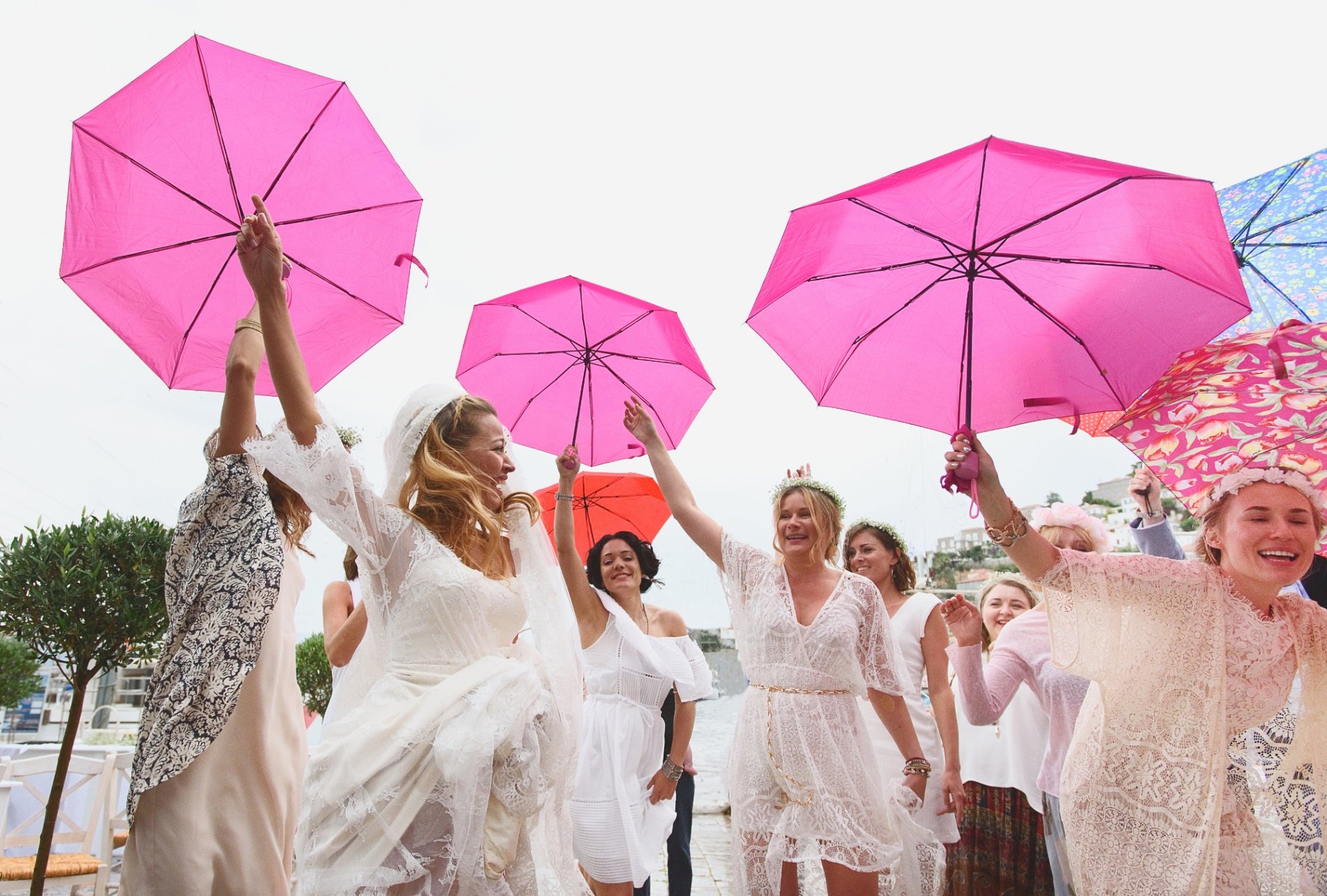
Hydra Photoshoot Guide 2026: The Car-Free Island Near Athens
Ninety minutes from Piraeus there is a Greek island with no cars and no motorbikes on it at all. That single fact is why Hydra photographs better than islands ten times its size: no traffic, no parked cars, no cables across the frame — just grey stone mansions stacked around a horseshoe harbour, mules on the quay, and a coast path that walks straight into golden hour. Sessions here start from €379, and Hydra works as a day trip from Athens or as the overnight everybody wishes they had booked.
Real shots from Hydra
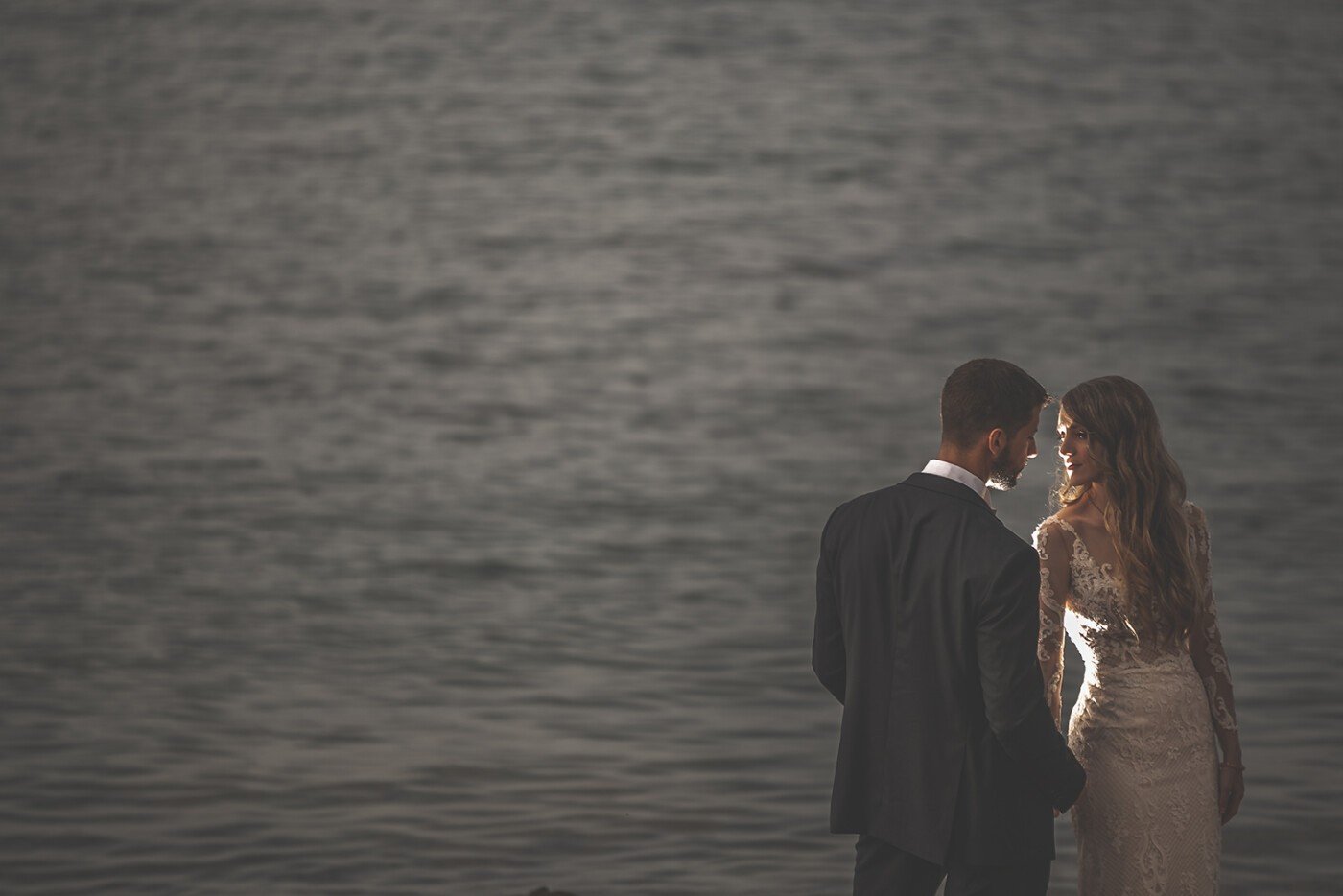
The harbour: an amphitheatre of stone
Hydra's port is a horseshoe of eighteenth-century shipowners' mansions — grey stone, red-tile roofs, built on sea money and stacked up the slope like an amphitheatre. There is no whitewash here and no bougainvillea overload; the island's palette is stone, terracotta and sea, which is unusual in Greece and photographs beautifully in flat light as well as low sun.
The quay itself is the set. Water taxis come and go, mules wait in the shade with their saddle blankets, and the marble courtyard of the Dormition monastery opens straight onto the waterfront — an enclosed, quiet, shaded square with an arcade and a clock tower, two steps from the busiest part of the port. It is the island's most reliable midday location.
Two practical notes. The harbour faces north, so it does not take a direct sunset; what it takes is the reflected warmth off the houses opposite, which is softer and often better for portraits. And the amphitheatre shape means altitude helps — climbing thirty or forty steps up any lane behind the port gives you the whole bowl of houses with the sea beyond.
The coast path west: Hydronetta, Kamini, Vlychos
West of the port the coast path is the island's golden-hour route, and it is the single best hour a visiting couple can book.
- Hydronetta, five minutes along, sits below the old cannons on the headland. Swimming rocks, deep blue water, and the first properly open western view.
- Kamini is about twenty minutes' walk: a small working fishing harbour with a handful of boats and a taverna or two. Quieter than the main port and more intimate in the frame.
- Vlychos, roughly thirty-five minutes out, has an old stone bridge over a dry streambed and a pebble bay. It is where the path stops feeling like a promenade and starts feeling like the countryside.
The path is stone, level enough for ordinary shoes, and it faces west — so from about an hour before sunset the light comes at you along the water. A one-hour couples session that starts at the cannons and ends at Kamini is the most-booked shape on the island, for good reason.
Lanes, steps and the hour after the boats leave
Behind the harbour, Hydra climbs. Stone lanes, whitewashed steps, cats, walled gardens, and doorways that have been photographed for a century — and, because nothing has wheels, no vehicle in any of them. Go up towards Kiafa and the lanes empty out completely; the higher you go, the more the harbour opens up behind you.
The island's best-kept secret is the hour after the last hydrofoil leaves. The day-trippers go, the quay empties, the light drops onto the stone, and the town goes back to being a town. If you are staying the night, book your session then — it is the same island with a tenth of the people in it, and it is the reason photographers who work here push couples towards an overnight.
What clients say about this kind of shoot
I can't say enough good things about Panagiotis and Vassileios. They captured every moment of our special day beautifully — from the getting-ready photos to the ceremony and reception, their talent shines through. They were incredibly professional, patient and attentive to our needs. The photos turned out even better than we could have imagined. We're so grateful to have these memories to cherish forever.
— Lamija on Panagiotis K.
It has been a year since our daughter got married. We cannot let this anniversary pass without reviewing our wonderful photographer, Christos Aggelidis. He also photographed our first daughter's wedding. We were so happy with his work then that we hired him again, and we are just as thrilled with the results this time. Christos and his team are true professionals. He listened closely to learn what we wanted. Then, he and his team used their great skills to capture photos and videos that truly reflect our family. We are so proud of these memories. He is a joy to work with and a master of his craft. We thank him deeply and recommend him to anyone. You will not be disappointed; you will be delighted.
— Nikos T. on Christos A.
There are some people who aren't simply professionals but become part of the most important moments of your life. Christos is one of those people for us. After our wedding years ago, there was no second thought about who would be beside us at our child's christening. And once again, everything was exactly as we felt it: true, beautiful and full of emotion. He has a unique way of making you feel at ease and at the same time capturing moments as they really are — without exaggeration, but with a great deal of love. For us he isn't just an excellent photographer. He is someone we trust, whom we hold in high regard and whom we are glad to have at our most important moments. Christos, thank you from the bottom of our hearts for the memories we will keep for a lifetime. 😊😊
— Barbara P. on Christos A.
This was actually our second time working with Christos! After seeing his work at my sister's wedding, we knew we wanted him for ours as well. Once again, it was absolutely the right decision! Christos is extremely easy to communicate with, speaks English excellently, and throughout the day was professional, attentive, creative and incredibly hardworking. We had specific requests, and he delivered exactly what we were hoping for, often capturing moments we didn't even realise would be so meaningful. The final photos, the album and the wedding video were beautiful. Choosing Christos a second time for a second big family moment was an easy decision. We would highly recommend him to anyone looking for a photographer who is truly passionate about his work and delivers with such care and attention. THANK YOU CHRISTOS!
— Eve D. on Christos A.
We booked Panagiotis for our wedding in Mykonos after A LOT of research into photographers based in Greece. His style really stood out as a photographer who puts real effort into telling the story of the day through his lens, and as a result his photos are absolutely beautiful and meaningful. From the first moment I contacted him he was friendly, welcoming and helpful, and really put me at ease that he was the right choice. Booking vendors abroad isn't easy, but Panagiotis was a pleasure to work with — organised and informative. On the day, Panagiotis and his co-photographer made their own way to the villa and set about taking photos instantly. The day was a little chaotic, but that doesn't show in his photos at all. They were everywhere, capturing everything — we can literally see our wedding minute by minute — yet the photos were never a chore, and he was brilliant at catching lovely moments without people even realising they were being photographed. We've ended up with over 1,700 incredible photos, and they really made me emotional when I received them. I can't recommend him highly enough.
— Jamie & Haydn on Panagiotis K.
We are so happy we chose Leo for our wedding photos! He went above and beyond, taking us to beautiful spots the day before and after the wedding, and he captured every single moment of the wedding day beautifully. Our photos are unbelievably gorgeous. He is such a lovely person with amazing talent — we recommend him 100% to all future couples out there. We are so glad we chose him. Thank you so much, Leo, for capturing our special day and all the memories!
— Sarah & Denver on Leo K.
Day trip or overnight? The ferry maths
Hydrofoils from Piraeus take around ninety minutes, with several sailings a day in season, and no car ferry — because there would be nothing to do with the cars. A day trip works: leave Athens in the morning, walk the coast path, eat on the quay, come back in the evening. Thousands of people do exactly that.
But a day trip puts you on the island between roughly eleven and six, which is precisely the wrong window photographically. If your trip is built around one good session, stay a night: the evening light and the empty morning are both yours. If you cannot, book the earliest boat you can and shoot the first two hours instead — Hydra before eleven is a genuinely different place. For couples combining the island with the capital, the Athens photo spots guide covers the city end, and the Athens Riviera is the other easy escape from town.
What Hydra asks of you
The no-wheels rule is charming and it is also a logistics constraint, so plan for it:
- Luggage moves by mule or by hand. Pack accordingly if you are staying, and expect steps between the quay and your room.
- Wear something you can walk in. The lanes are stone, sloped and often stepped. Heels work in photographs on the quay and nowhere else; bring them in a bag and change.
- The monastery is a working church with a museum and an entry fee for parts of it, so check hours and rules before planning a session inside the courtyard rather than around it.
- There is no beach town. Swimming is off rocks and platforms, which is excellent for photography and less good for small children.
- The port gets full in August. Mornings and evenings stay workable, but the middle of a summer day on the quay is crowded and hard-lit.
Book it
A local photographer is the difference between a nice walk and a gallery you actually use: they know which lane is empty at six, where the reflected light off the mansions lands, and how far you can get in an hour without anyone being out of breath. Photographers on Photo Greece cover Hydra for couples, families, proposals and solo travellers, with all-inclusive packages from €379 — roughly €379 to €450 for one to two hours. Book a slot and you are matched with a photographer within 24 hours; the edited gallery usually arrives about a week later. Many couples pair the island with a session in Athens at either end of the trip, or start with a couples shoot on Hydra and let the harbour do the rest.
Frequently asked questions
Is Hydra really car-free?
Yes — there are no cars and no motorbikes anywhere on the island. Goods move by mule, water taxi and handcart, and everything else moves on foot. For photography this is the island's whole advantage: no traffic, no parked cars and no cables in the frame, which is rare in Greece. It also means steps and stone lanes, so bring shoes you can walk in and carry anything else.
Can we do a photoshoot on Hydra as a day trip from Athens?
Yes. Hydrofoils from Piraeus take about ninety minutes with several sailings a day in season, and a session fits comfortably into the day. The catch is timing: a day trip lands you on the island in the middle of the day, when the light is hardest. Take the earliest boat and shoot the first two hours, or stay the night and use the hour after the last hydrofoil leaves.
Where is the best light on Hydra?
The coast path west of the port. It faces west, so from about an hour before sunset the light comes along the water at you — past the cannons above Hydronetta, on to Kamini in twenty minutes and Vlychos in about thirty-five. In the middle of the day, work the shaded lanes behind the harbour or the monastery courtyard on the quay, both of which hold soft light when the port is glaring.
How long should a Hydra photoshoot be?
One hour covers the harbour and the first stretch of the coast path, which is the classic route and enough for most couples. Two hours lets you add the lanes above the port or walk out as far as Kamini at a pace that still feels like a holiday. Longer sessions are worth it only if you are staying overnight and can split them across an evening and a morning.
Want professional photos on Hydra?
Browse portfolios, compare packages, and book a verified local photographer in minutes.