Rhodes & Lindos Photo Guide: Medieval Old Town, Acropolis Light and St Paul's Bay
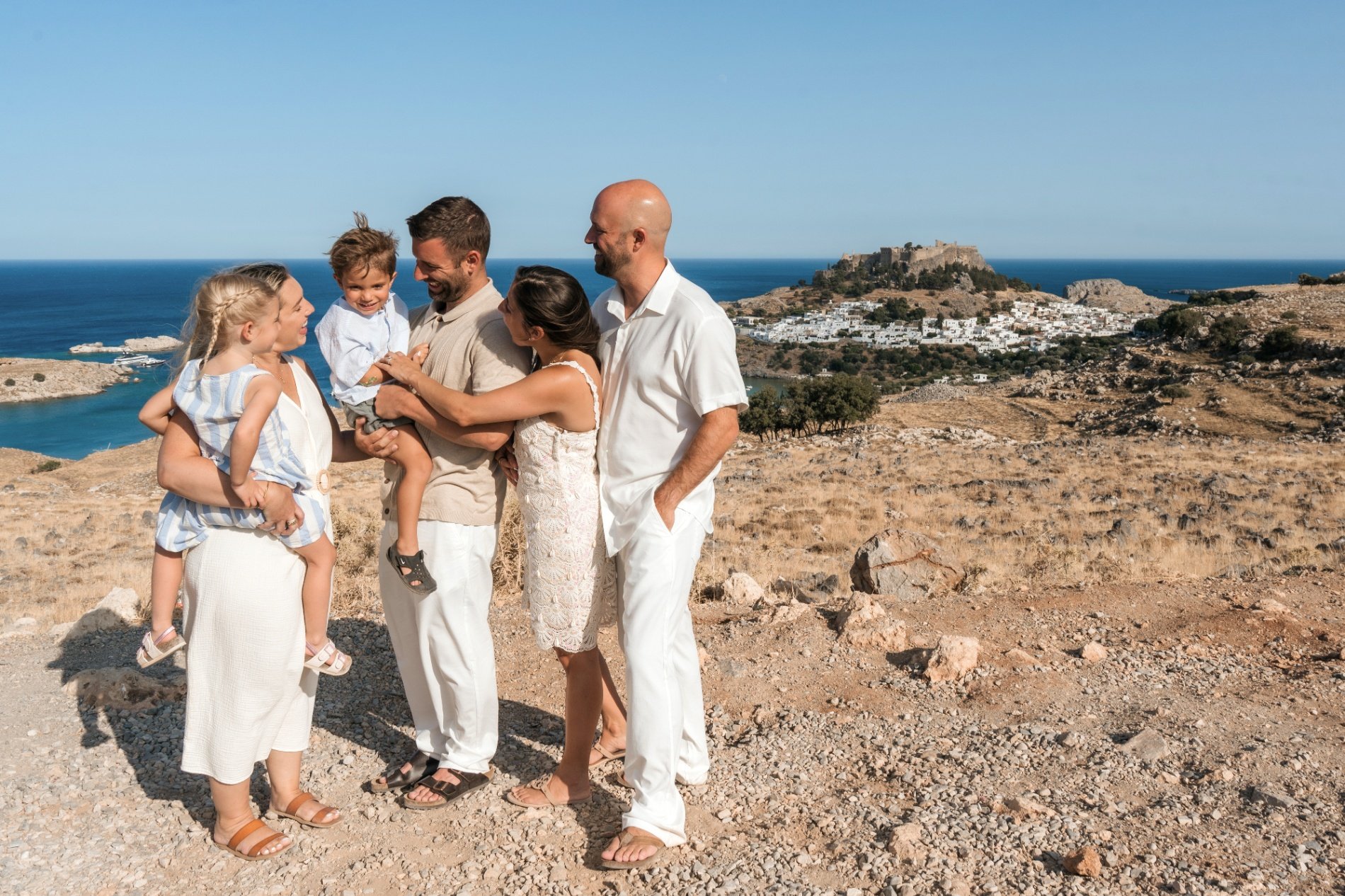
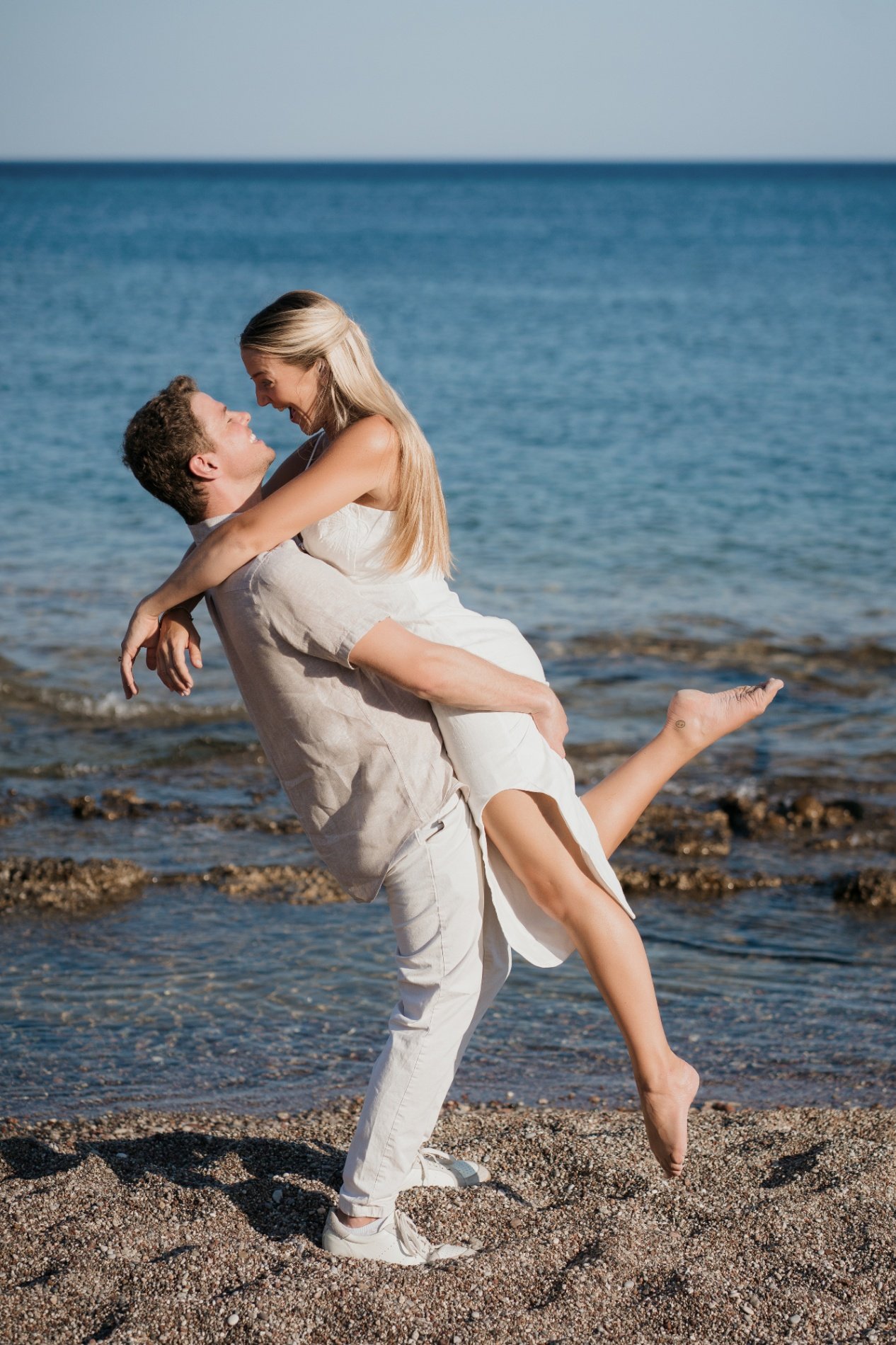
Rhodes gives you two completely different shoots within an hour's drive of each other: a walled medieval city that still feels lived-in rather than staged, and a white village stacked beneath a clifftop acropolis. Add St Paul's Bay — a near-circular cove with a tiny white chapel — and you have one of the most varied photo days anywhere in Greece. The only thing that can ruin it is timing. Rhodes is a major cruise port, and the difference between 8am and 11am inside the Old Town is the difference between an empty stone corridor and a slow-moving crowd.
Real shots from Rhodes
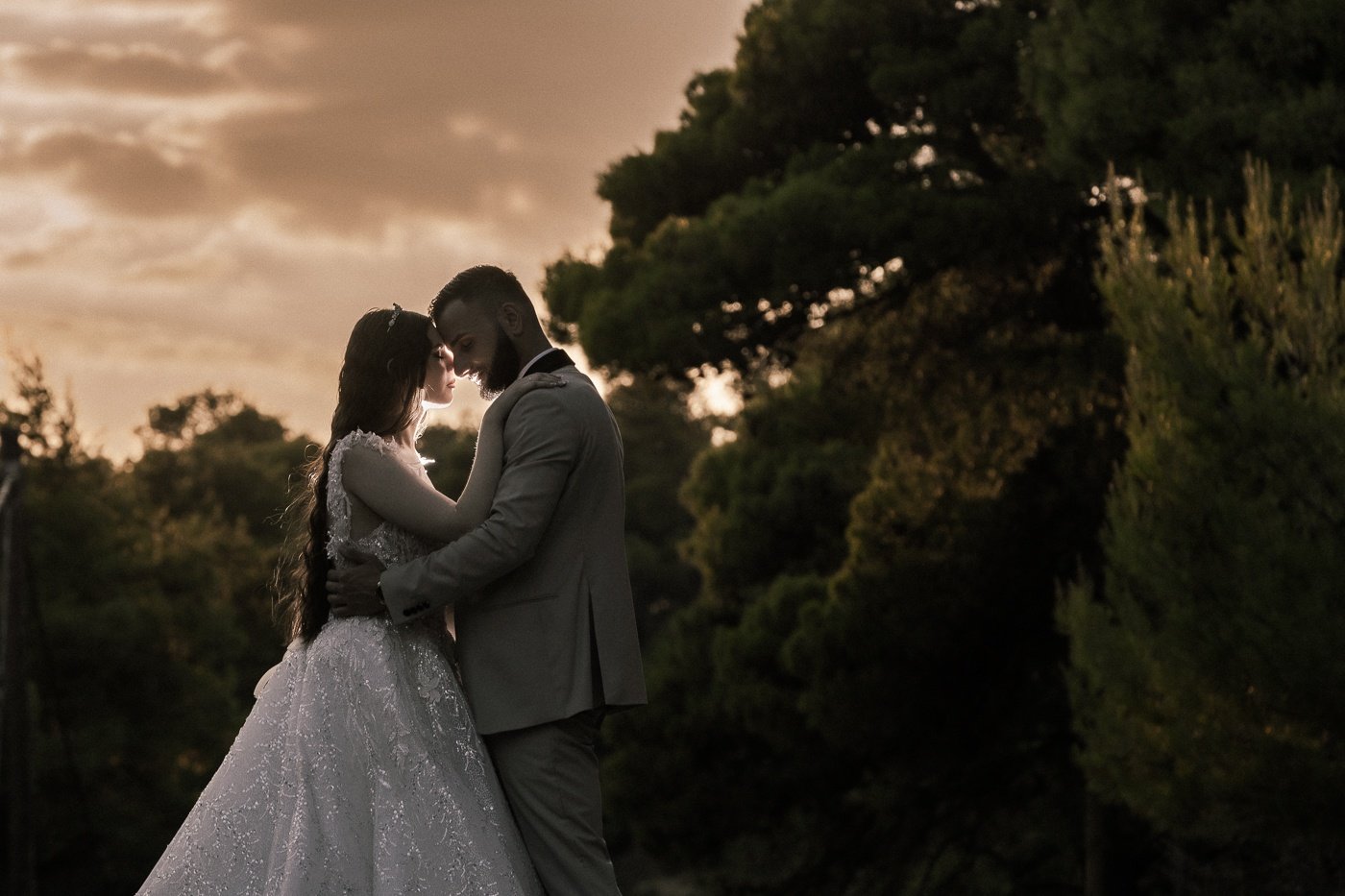
Rhodes Old Town: be inside the walls by 9am
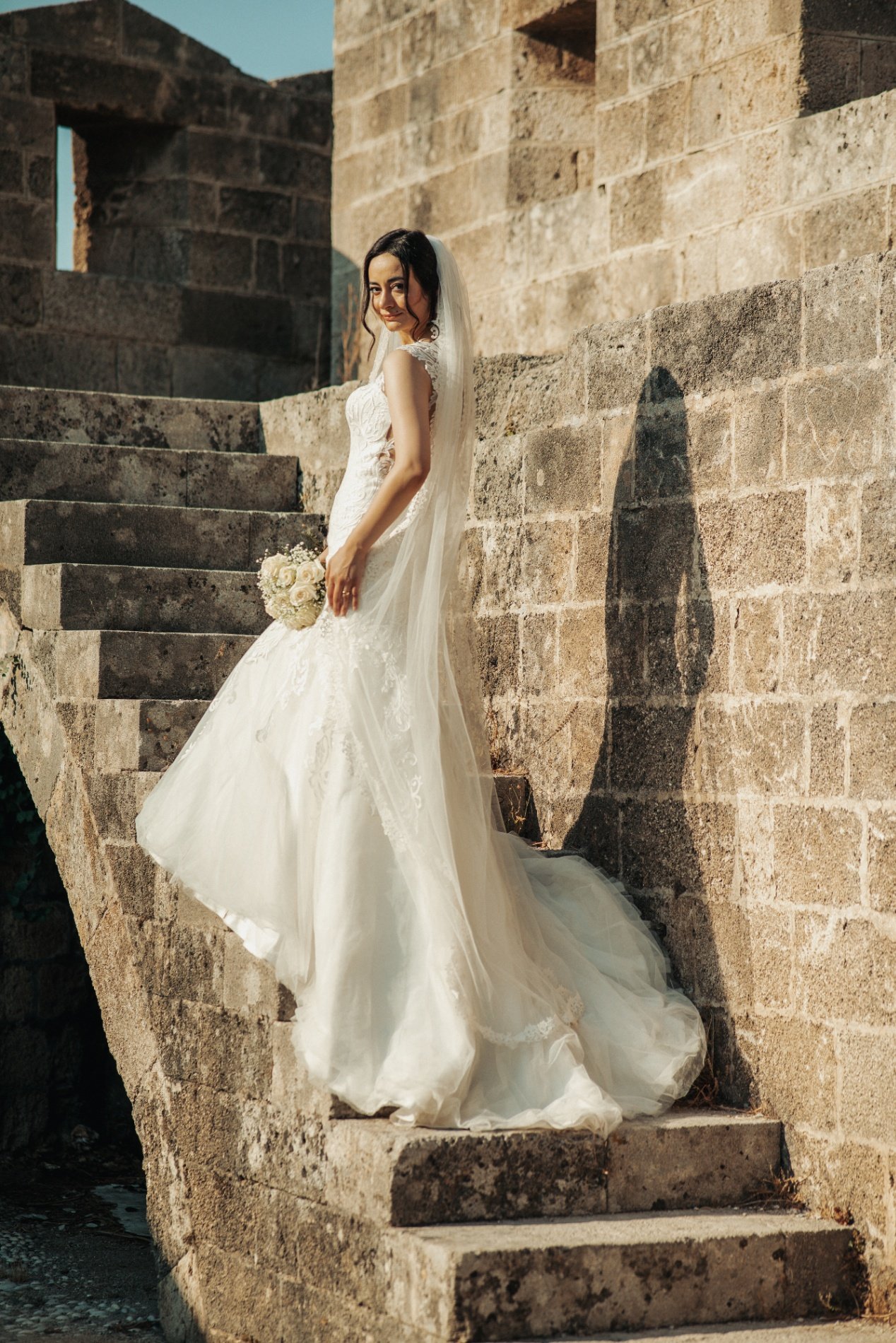
The medieval town of Rhodes — a UNESCO World Heritage Site built by the Knights of St John — sits right beside the commercial harbour where the cruise ships dock. Passengers are through the gates by mid-morning, and from roughly 10am until late afternoon the main lanes around Sokratous street move at shuffle pace. The rule for photography is simple: be inside the walls by 9am, earlier still in July and August. Before the shops open, the Old Town belongs to the cats, the bakery vans and you.
Street of the Knights
The Street of the Knights (Odos Ippoton) is the frame everyone comes for, and it earns it: a straight, cobbled medieval street climbing between the austere stone inns of the knights' "tongues" up to the Palace of the Grand Master. Early in the morning the low sun rakes across the cobbles and arches, and a couple can stand in the middle of the street with nobody else in the picture. By late morning that is simply impossible. The palace facade at the top, with its twin round towers, works slightly later too — the square in front of it absorbs people better than the narrow street below.
Gates, walls and the dry moat
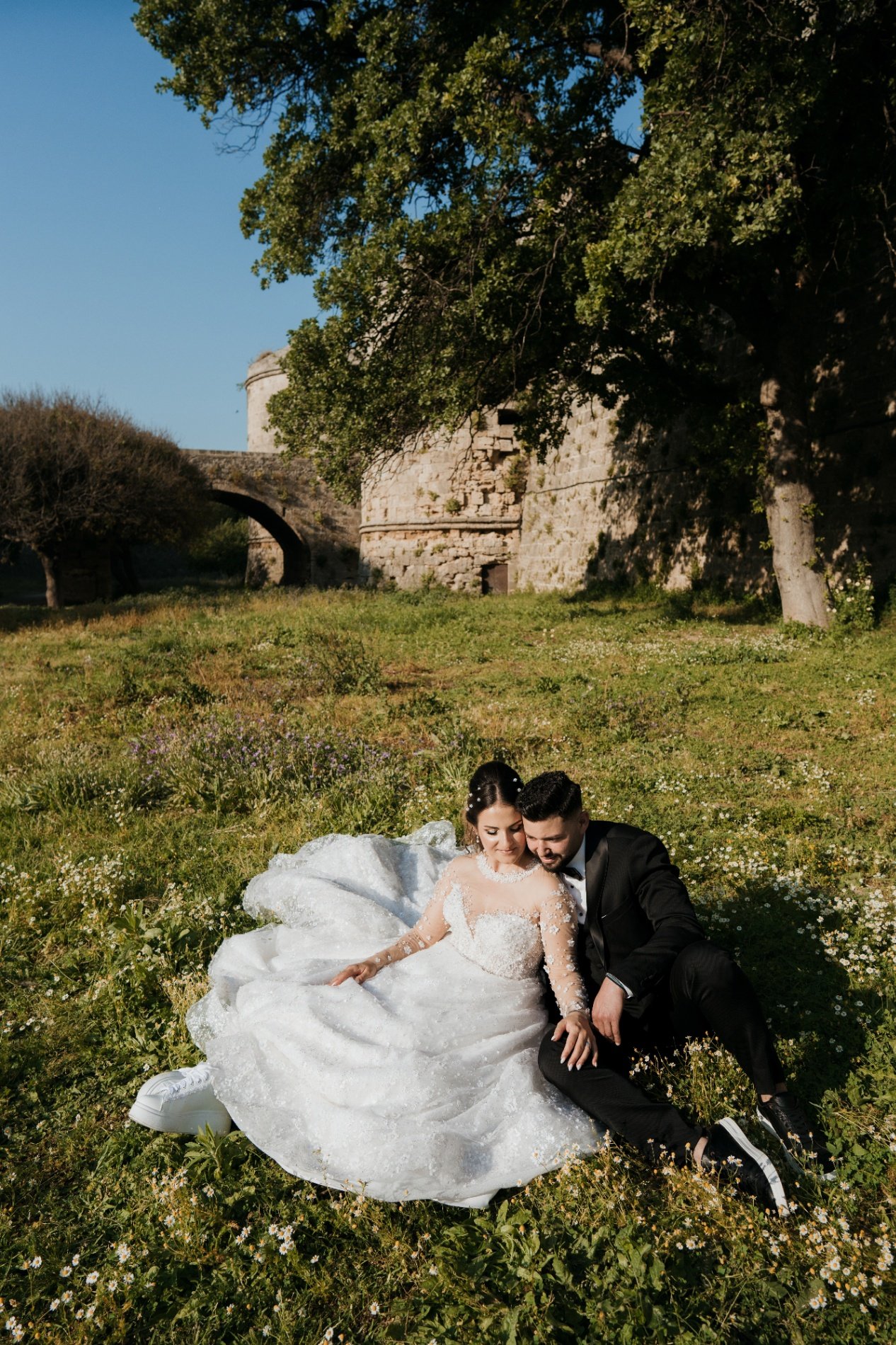
The d'Amboise Gate on the north-west side is the grandest way into the town and photographs beautifully with its stone bridge and massive towers. For something most visitors never see, walk the dry moat: a green corridor running between the outer and inner fortifications, shaded, quiet even in high season, with the walls towering on both sides — it gives portraits a sense of scale nothing else in the town matches. The Marine Gate faces the harbour and is the most ornate, but it is also the closest to the ships, so shoot it first.
Mandraki Harbour and the windmills
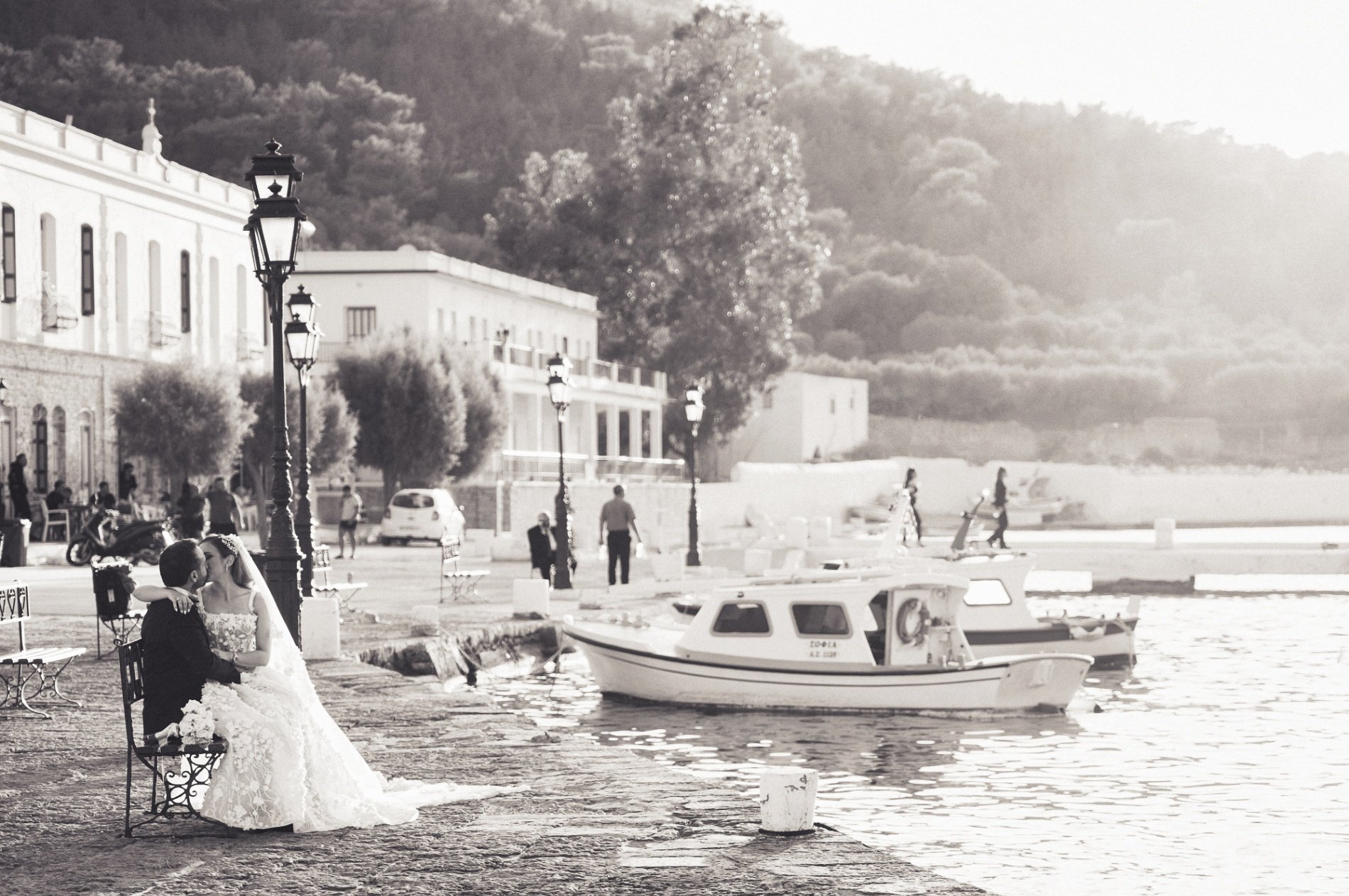
Just outside the walls, Mandraki Harbour is where the Colossus of Rhodes is popularly said to have stood; today two bronze deer, Elafos and Elafina, top the columns at the harbour mouth. Walk the pier past the three medieval windmills to the Fort of St Nicholas at the tip — in the morning you shoot back towards the town with the light behind you. There is almost always a breeze here, which flatters veils and loose dresses if you plan for it.
Lindos: the white village under the acropolis
Lindos lies about 50 kilometres south of Rhodes Town — under an hour by car down the east coast. The village is a knot of whitewashed captains' houses and pebble-mosaic courtyards pressed against the base of a sheer rock, with the ancient acropolis on top. Cars stay outside; everything inside happens on foot, which is exactly what keeps it photogenic.
Timing the donkey path
The path up to the acropolis is shared with the famous Lindos donkeys. It is steep, stepped in places and completely exposed — in July and August the climb is genuinely hot by 10am. Go up as soon as the site opens in the morning: you get soft light on the east-facing bays, an uncrowded path, and cooler air for anyone climbing in a wedding dress or a suit. Late afternoon is the alternative, when the stone warms in colour and the day-trippers have thinned out.
On the acropolis
At the top, the Hellenistic stoa and the columns of the Temple of Athena Lindia stand against open sea and sky — clean, graphic frames with no modern clutter. Walk the edges: from the south side you look straight down onto St Paul's Bay, and from this height its almost-closed loop of water reads as the famous heart shape. The main village beach curves away to the north. The east coast is usually gentler on wind than the island's west side, but the summit is exposed, so hold onto hats.
St Paul's Bay
Below the acropolis, St Paul's Bay is a near-enclosed circle of turquoise water with a small white chapel dedicated to the Apostle, who by tradition landed here. The chapel is one of the most requested wedding and proposal settings on Rhodes: whitewashed, simple, with the acropolis cliffs rising behind it. Morning gives you calm water and light on the cliff face; late afternoon puts soft light on the chapel itself. It is a small place — if a wedding is under way, give it room and work from the rocks on either side of the bay instead.
What clients say about this kind of shoot
We booked with Vassilis earlier this year for our wedding on Symi Island. We were incredibly impressed with his work and the style of his photography. He is so creative and the pictures he created are amazing. He has such a creative vision and took some timeless pictures that we will cherish in our family for many years to come. We are so pleased we worked with you, Vassilis — thank you for making our special day so magical!
— Simran B. on Vassilis I.
We are absolutely thrilled with our wedding photos! We couldn't have asked for a more professional, friendly, and talented photographer. Thank you so much Vassilis for capturing our special moments so beautifully!
— Sara F. on Vassilis I.
It has been a year since our daughter got married. We cannot let this anniversary pass without reviewing our wonderful photographer, Christos Aggelidis. He also photographed our first daughter's wedding. We were so happy with his work then that we hired him again, and we are just as thrilled with the results this time. Christos and his team are true professionals. He listened closely to learn what we wanted. Then, he and his team used their great skills to capture photos and videos that truly reflect our family. We are so proud of these memories. He is a joy to work with and a master of his craft. We thank him deeply and recommend him to anyone. You will not be disappointed; you will be delighted.
— Nikos T. on Christos A.
Thank you very much for the beautiful photos and the memories that we will keep forever. We recommend you unreservedly!
— Viki P. on Vassilis I.
There are some people who aren't simply professionals but become part of the most important moments of your life. Christos is one of those people for us. After our wedding years ago, there was no second thought about who would be beside us at our child's christening. And once again, everything was exactly as we felt it: true, beautiful and full of emotion. He has a unique way of making you feel at ease and at the same time capturing moments as they really are — without exaggeration, but with a great deal of love. For us he isn't just an excellent photographer. He is someone we trust, whom we hold in high regard and whom we are glad to have at our most important moments. Christos, thank you from the bottom of our hearts for the memories we will keep for a lifetime. 😊😊
— Barbara P. on Christos A.
This was actually our second time working with Christos! After seeing his work at my sister's wedding, we knew we wanted him for ours as well. Once again, it was absolutely the right decision! Christos is extremely easy to communicate with, speaks English excellently, and throughout the day was professional, attentive, creative and incredibly hardworking. We had specific requests, and he delivered exactly what we were hoping for, often capturing moments we didn't even realise would be so meaningful. The final photos, the album and the wedding video were beautiful. Choosing Christos a second time for a second big family moment was an easy decision. We would highly recommend him to anyone looking for a photographer who is truly passionate about his work and delivers with such care and attention. THANK YOU CHRISTOS!
— Eve D. on Christos A.
Ending the day
For sunset, either stay in Lindos and use the rooftops and lanes as the light turns honeyed, or head back towards Rhodes Town and finish on Monte Smith, the hill of the ancient acropolis of Rhodes, where the columns of the Temple of Apollo face west over open sea and the sun drops straight into the water.
Planning a Rhodes photoshoot
A strong plan for a photoshoot on Rhodes is one location done at the right hour, not three done at noon: the Old Town at 8am, or Lindos and St Paul's Bay from late afternoon into sunset. A local photographer will know which gate, lane or rooftop is quiet on any given day — you can browse Rhodes photographers and book online, with sessions from €379 all-inclusive.
Frequently asked questions
What time should you photograph Rhodes Old Town?
Be inside the walls by 9am, earlier still in July and August. Cruise passengers are through the gates by mid-morning, and from roughly 10am until late afternoon the lanes around Sokratous street move at shuffle pace. Early sun rakes across the cobbles of the Street of the Knights, and the Marine Gate sits closest to the ships, so shoot it first.
How far is Lindos from Rhodes Town and when should you go?
Lindos lies about 50 kilometres south, under an hour by car down the east coast, and cars stay outside the village. Climb the donkey path to the acropolis as soon as the site opens — it is steep, exposed and genuinely hot by 10am in summer — or come in late afternoon, when the stone warms in colour and the day-trippers have thinned out.
Is St Paul's Bay good for wedding or proposal photos?
It is one of the most requested settings on Rhodes: a near-enclosed circle of turquoise water, a small white chapel and the acropolis cliffs rising behind. Morning gives calm water and light on the cliff face, late afternoon puts soft light on the chapel itself, and from the acropolis above the bay reads as a heart shape. If a wedding is under way, work from the rocks on either side.
Want professional photos on Rhodes?
Browse portfolios, compare packages, and book a verified local photographer in minutes.